


FOOD AND BEVERAGE BRAND FILMS: HOW WE CAPTURE APPETITE AND CULTURE
Written by Yudi Suarbawa / 5 Minutes Read
F&B brand video Bali production is one of the most visually demanding categories we work in, and also one of the most rewarding when it is done right. The challenge is specific. Food looks different on a phone camera than it does in real life. The steam dissipates. The colour flattens. The texture that made you reach across the table disappears into a grey middle ground of overexposed highlights and muddy shadows. Meanwhile, the restaurant next door is posting Reels that stop people mid-scroll.
That gap between what a dish looks like in person and what it looks like on screen is exactly where F&B brand video Bali production lives. Closing that gap is not just a creative exercise. According to Restroworks’ 2026 restaurant social media research, 54% of diners discover new restaurants through social platforms each month, and 65% say visuals heavily influence where they choose to eat. Furthermore, diners now spend an average of 40 minutes researching restaurants on social media before booking, according to Barclaycard Payments research. The content a brand puts out is doing sales work before a single guest walks through the door.
Picture by Yudi Suarbawa – Taken at Uma Garden, Bali (2026)
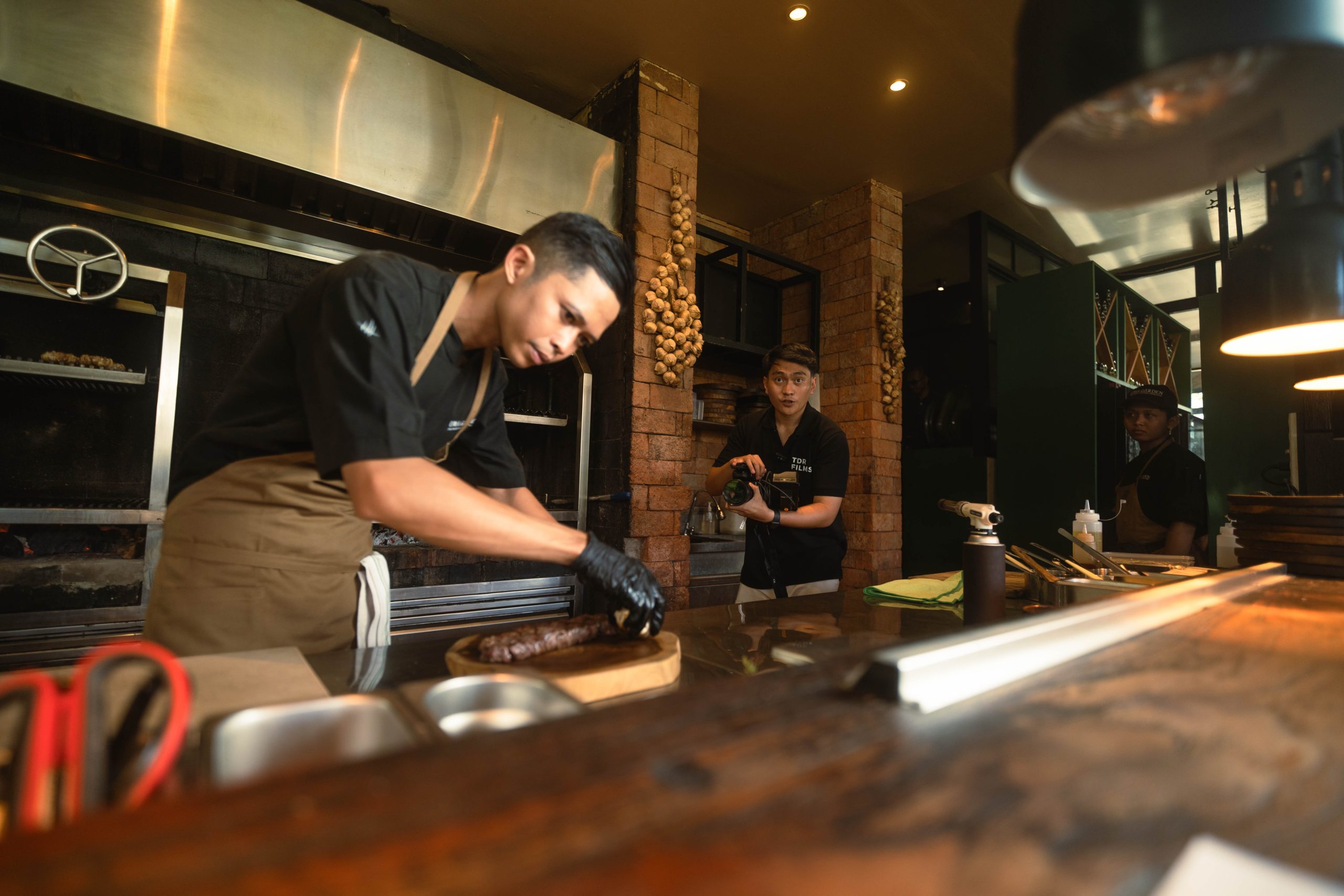
Photo by Rico Astina at Uma Garden (2026)
WHY MOST F&B CONTENT FAILS TO CONVERT APPETITE INTO ACTION
Most restaurant social media content fails for one of two reasons. Either it looks too polished and staged, or it looks too casual and unplanned. Both lose the viewer. The staged content feels like an advertisement. The casual content feels like every other plate of food on the internet.
What actually works sits in the middle. Content that feels real but is clearly crafted. A shot of flame hitting a wagyu cut over charcoal that shows the heat without looking like a cooking show. A pour of wine that catches the light in a way that makes you want to smell the glass. The sound of a wood-fired grill crackling under a soundtrack that matches the mood of the room.
However, getting that balance right requires more than a good camera. It requires understanding what makes the brand specific, not just what makes the food look good. Any restaurant can light a dish well. The content that builds a following does something harder. It makes the viewer feel like they already know the place before they have visited.
HOW TDR FILMS APPROACHED THE UMA GARDEN BALI PROJECT
Uma Garden Bali sits in Umalas, a few minutes from both Seminyak and Canggu. It is a fire-based restaurant built around the philosophy of bringing people together over real food. Wood-fired steaks, wine, communal tables, live music twice a week, and an open-flame kitchen at the centre of the space. The brand is specific. The experience is specific. Therefore, the content needed to be specific too.
When TDR FILMS began working on social media Reels for Uma Garden, the starting point was not the menu. It was the atmosphere. What does it feel like to be at Uma Garden at 7pm on a Tuesday, when the jazz starts and the charcoal glows and the garden fills up? That feeling is what the content needed to carry, because that feeling is what makes someone put down their phone and make a reservation.
The shoot covered the key sensory moments that define the Uma Garden experience. The char on a dry-aged cut as it comes off the grill. The texture of communal plates arriving at a long table. The quality of light in the garden after sunset, warm and low and exactly the kind of light that makes every shot look like it was planned. In addition, the sound of the space, the crackle of the fire, the low hum of a room that is comfortable and full, became part of the content rather than background noise.
The result was a set of Reels that felt like Uma Garden. Not like a food photography studio. Not like a product shoot. Like the actual place, on an actual evening, with actual people who wanted to be there.
WHAT GOOD F&B BRAND VIDEO BALI CONTENT ACTUALLY REQUIRES
Across every F&B project TDR FILMS has produced in Bali, the content that performs shares a set of creative principles.
It captures the sensory detail that phones miss. Steam, texture, colour temperature, the specific quality of natural or fire-lit light. These elements require real lighting knowledge and the right camera setup. For example, the difference between a wagyu cut shot on a phone and the same cut shot with a proper lens and lighting rig is not subtle. The audience feels it even if they cannot articulate why.
It understands the brand before it frames the shot. Uma Garden is not a fine dining restaurant. It is a neighbourhood spot with serious food and a relaxed soul. That distinction changed every creative decision, from the music choice in the edit to the pace of the cuts to the ratio of food shots to atmosphere shots. A different brand would require a different film entirely.
It treats sound as a creative tool, not an afterthought. The crackle of a wood fire, the sizzle of a steak, the clink of a wine glass in a garden at night. These sounds are free. They are already happening in the space. However, capturing them well requires a proper audio setup on set, not just the ambient recording from a camera microphone.
It is built for the platform from the first frame. Reels reward the first three seconds more than any other format. Because of this, every piece of F&B content TDR FILMS produces starts with the most visually compelling moment in the piece, not a logo, not a title card, not a slow zoom in on a menu. The hook comes first.
THE BUSINESS CASE FOR PROFESSIONAL F&B BRAND VIDEO IN BALI
The numbers make a clear argument. According to 2026 research from Cropink, 57% of diners say social media directly influences their reservation decisions. Short-form video adoption among restaurants nearly doubled between 2023 and 2025, rising from 26% to 48%. Meanwhile, restaurants investing in strategic social media content saw an average 9.9% lift in revenue, according to Restroworks’ 2026 data.
In Bali’s F&B market, the visual competition is real. The island has hundreds of restaurants competing for the same international and local audience across the same platforms. The brands that win that competition are not always the ones with the best food. They are the ones whose content makes the best case for their food.
Uma Garden already had the atmosphere, the philosophy, and the product. The F&B brand video Bali production work TDR FILMS did helped that story reach the people who needed to hear it, in the format those people actually use to decide where to spend their evening.
That is what good content does. It closes the gap between what a brand already is and what the right audience sees when they scroll past.
Running an F&B brand in Bali and want your content to actually reflect what makes your place worth visiting?
Tell us about your restaurant or cafe. TDR FILMS will help you figure out what the right content looks like for your specific brand and audience.