Written by Yudi Suarbawa / 6 Minute Read
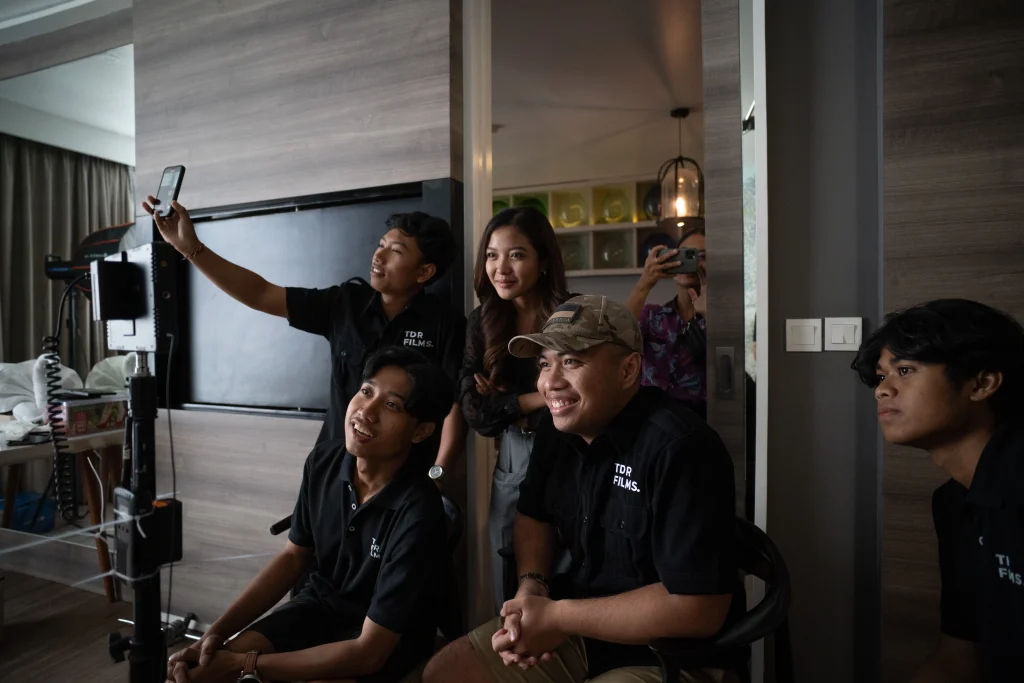
Picture by Aditya Satya – Taken at Wyndham Garden Kuta (2025)
Measuring brand video ROI is something most brands skip entirely. In fact, 17% of marketers do not track their video spend at all — according to Wyzowl’s 2026 Video Marketing Report. Nearly one in five businesses that invest in video has no system to understand whether it works.
This matters because decisions about brand video ROI rely on real data — not gut feeling. However, without a measurement framework in place, teams repeat campaigns that underperform, cut budgets from content that was actually working, and struggle to build the internal case for continued investment. The good news is that measuring brand video ROI is not complicated. It does, however, require knowing what you want to measure before the camera rolls — and that starts with a clear objective.
WHY BRAND VIDEO ROI IS HARDER TO MEASURE THAN PAID ADS
Performance marketing is relatively straightforward to evaluate. You spend a certain amount on a paid ad, you receive a defined number of clicks, and a percentage of those clicks convert. The math is direct. Brand video, however, operates differently. Its effects are real, but they spread across a longer time horizon and across more touchpoints than a single campaign.
This is why measuring brand video ROI the same way you measure a Google Ads campaign leads to disappointment. For example, a 90-second brand film on your homepage does not generate immediate conversions — instead, it builds enough trust that when a potential client is ready to decide, your brand is the name they remember. That is a different job, and therefore it needs different metrics.
According to Wyzowl’s 2026 data, 82% of marketers say video marketing has given them a good ROI. However, that figure only holds meaning for the 83% who actually track their results. For the rest, good ROI remains an assumption — and assumptions do not scale. This is one of the core reasons most brand videos fail to drive results.
The Brand Video ROI Metrics That Actually Matter
Before your next video goes live, decide which of these metrics align with your stated objective. Not all of them apply to every piece of content — the right set depends on the goal you established in your brief.
View count and reach
View count is the most basic metric — it tells you how many people the film reached. On its own, however, it tells you nothing about whether the content worked. A video with 50,000 views that nobody remembered is worth less than a video with 5,000 views that moved the right people to act.
Watch time and completion rate
How far into the video do people watch? Average completion rate tells you whether the content holds attention. For a 90-second brand film, a completion rate above 50% is solid. Above 70% is strong. As a result, if viewers consistently drop off in the first 15 seconds, the hook is not working. If they drop at the 60-second mark of a 90-second film, the pacing likely drags in the second half.
Click-through rate
If the video includes a call to action — visit this page, book a call, download this guide — what percentage of viewers follow through? According to Digital Applied’s 2026 video marketing analysis, landing pages with embedded video convert at 86% higher rates than text-only equivalents. Therefore, if your video sits on a landing page and your conversion rate does not reflect that lift, something in the video or the page design needs attention.
Website behaviour after viewing
Beyond the click, what do viewers do when they reach your site? Do they bounce immediately, or do they explore further? Do they visit your services page, your portfolio, your contact form? Google Analytics can show you the downstream behaviour of viewers who arrive via your video content — and this trail often tells a more useful story than the video metrics alone.
How to Measure Lead Quality and Brand Impact
In addition to the metrics above, two less obvious indicators often carry the most weight for brand video specifically.
The first is lead quality. According to Wyzowl’s 2026 research, 85% of consumers have been convinced to buy a product or service after watching a video. However, the more useful question for a hospitality brand or production house is whether video-driven leads convert at a higher rate than leads from other sources. Do they arrive with a clearer understanding of your offer? Do they feel better matched to what you actually do? These are qualitative signals that require input from your sales or client-facing team — not just a dashboard.
The second is brand recall and sentiment. For example, post-campaign surveys, social listening, and direct client feedback reveal whether the film shifted how people perceive your brand. For hospitality businesses in Bali, this often surfaces in the language guests use when they enquire — whether they reference specific imagery or feelings from the film, and whether their expectations align more closely with the actual experience. If you suspect your current video is no longer doing this job, read our piece on the 5 signs your brand video needs an upgrade.
How to Build Your Measurement System
The most common measurement mistake is treating it as an afterthought — something to configure after the film goes live, using whatever tools happen to be available. As a result, teams end up with incomplete data and find it nearly impossible to compare performance across campaigns.
The right approach is to define your measurement framework before the shoot. This connects directly to how you brief your production house. Specifically, that means:
- Deciding which metrics align with your stated objective
- Setting up UTM tracking links for every distribution channel before launch
- Configuring analytics tools on your website and landing pages in advance
- Defining what success looks like in concrete terms — not just “we want good engagement”
Companies that use video systematically — with defined objectives, tracked metrics, and a feedback loop into future content — see 49% faster revenue growth than those that do not, according to WordStream’s video marketing data. Furthermore, the difference is not the quality of the video. It is the rigour of the system around it.
What Good Results Actually Look Like
The honest answer is that it depends on your objective. A brand film designed to drive hotel bookings should measure success against booking enquiry volume and conversion rate. Similarly, a film built to establish credibility for a B2B pitch should track sales cycle length and deal close rate. A film designed to build social reach should measure follower growth, share rate, and organic reach over time.
The brands that achieve the strongest returns from video investment share one habit: they refuse to accept vague success metrics. They define what winning looks like before production starts — and they build the measurement infrastructure to know whether they got there. To understand what that process looks like end-to-end, read what working with a production house actually looks like.
That is not a complicated system. It is simply a deliberate one.
Want a Brand Video That Comes With a Clear Measurement Plan?
That is how we work at TDR Films. Tell us what you want to achieve and we will help you figure out how to know whether you got there.