

Industrial and Manufacturing Video Production in Jakarta and West Java
Written by TDR FILMS / 9 Minutes Read
TDR FILMS is the industrial video production Jakarta and West Java partner for companies that need safety, access, technical accuracy, and visual clarity handled together. A disciplined production system protects operations while making complex work understandable to non-specialist audiences.
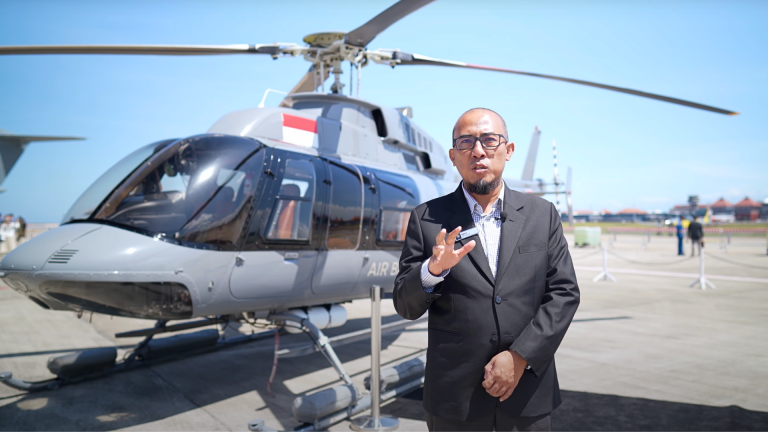
Picture by Tristan D. Rama (2022)
- The technical recce is both a creative and safety document.
- Film real process within approved operational windows.
- Translate engineering detail into visible cause and effect.
TDR FILMS has worked across aviation, mining, industrial and remote environments in Indonesia. Those projects taught us that the production plan must integrate HSE, logistics and story. Industrial filmmaking is not normal corporate coverage wearing a safety vest.
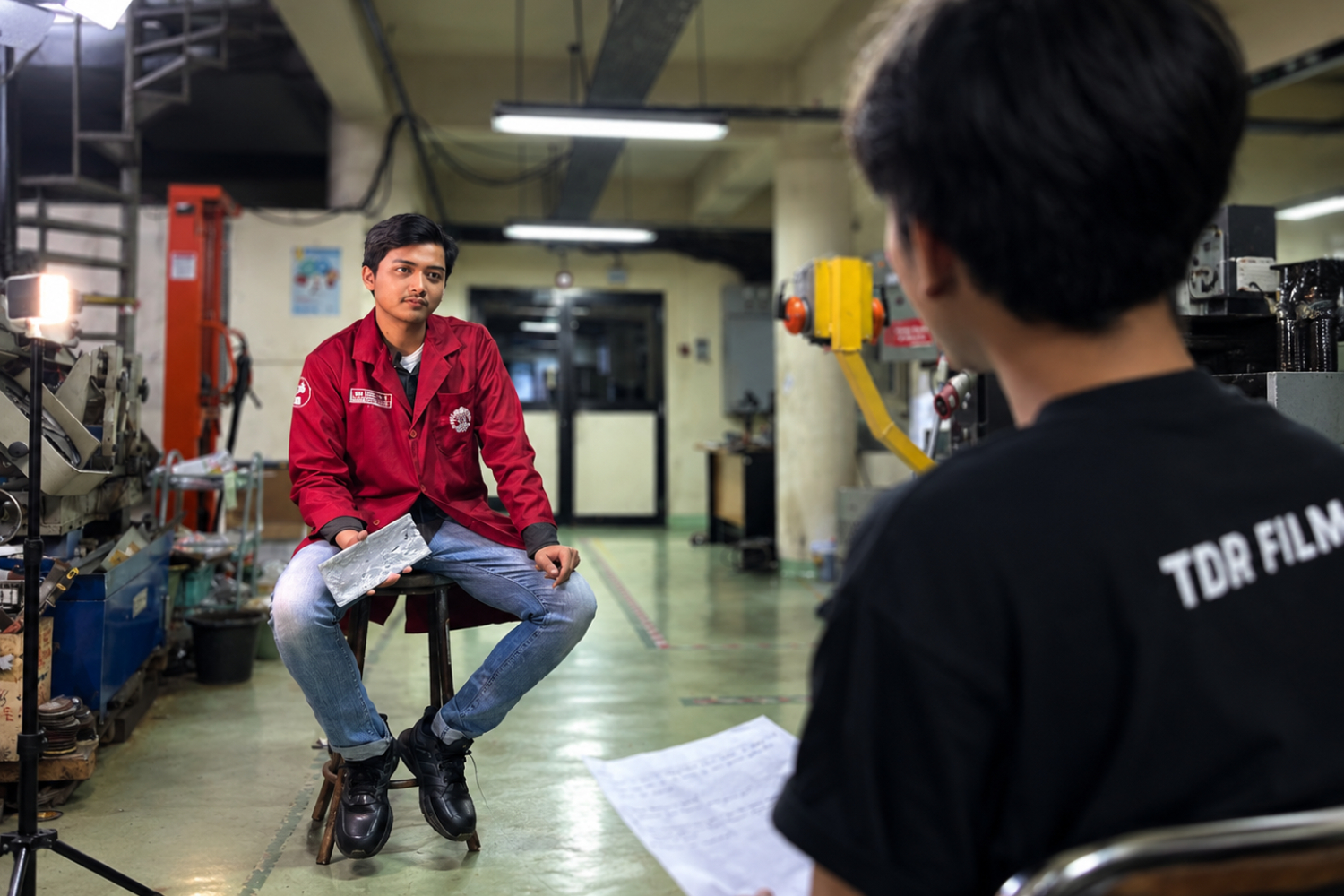
Photo by Dwi Antara at Universitas Indonesia (2023)
What does industrial video production Jakarta require?
Industrial video production documents technical operations for customers, investors, employees, regulators, recruitment or training. It may cover manufacturing, mining, aviation, energy, construction, logistics or heavy services. The film must be visually clear without misrepresenting process, safety or capability.
The audience may include engineers and non-technical decision-makers. That requires two layers: accurate operational detail and a simple narrative explaining why the process matters. Our Papua industrial-production guide shows how location realities shape both.
What should be prepared before filming at an active site?
Confirm scope, access zones, induction, PPE, escorts, emergency procedures, prohibited equipment, radio rules, production windows, shutdowns, chemical or electrical hazards and personal-data restrictions. Share names, identification and equipment lists early. Treat permits as operational dependencies, not paperwork for the night before.
Identify the site decision-maker who can stop filming. The director controls the creative plan; site HSE and operations control safe access. That hierarchy should be explicit on the call sheet.
How do HSE, PPE and operational access affect the shoot?
HSE affects camera placement, crew size, lighting, movement and time. Tripods may obstruct routes. Wireless equipment may be restricted. Heat, dust, noise and machinery change battery, lens and audio decisions. Some areas require intrinsically safe devices or no filming at all.
A lean crew can reduce exposure, but too few people creates manual-handling and supervision problems. The correct team balances risk, coverage and operational burden. Every person must understand both their production role and site obligations.
How does a technical recce prevent disruption?
The recce maps the process sequence, sun and lighting conditions, noise, power, access, control rooms, interview spaces and safe camera positions. It also tests whether the intended process will actually operate on shoot day. A storyboard built without operations input may request an impossible sequence.
Use the location-recce framework to convert observations into a route, shot priorities and contingencies. For West Java plants, travel and shift-change traffic should be built into the schedule rather than treated as delay.
How do we explain complex processes visually?
Start with inputs, transformation, control and outcome. Wide shots establish system scale. Medium shots show human-machine interaction. Close details reveal precision, material change and inspection. Graphics should explain what the camera cannot see, not repeat obvious action.
Interview operators and engineers for cause and effect: what must happen, what can go wrong, how quality is verified and why the process matters to customers. This creates useful language without forcing technical people into advertising lines.
Who should be interviewed?
Leadership explains investment and strategic value. Engineers explain design and control. Operators explain daily reality. HSE teams explain safeguards. Customers or downstream users can validate performance when appropriate. Each voice should answer a different question.
Do not use job title as a proxy for camera confidence. Pre-interviews identify who can explain accurately and naturally. A technically brilliant employee may need a quieter location and more time, not a replacement by a polished spokesperson.
How should production be planned around shifts and machinery?
Build the shot list against the operating schedule. Prioritise irreversible or infrequent processes first. Plan interviews outside peak noise. Protect meal, prayer and shift handover times. Use redundant data backups before leaving the site.
Our portfolios involving mineral operations and Bell Textron aviation reflect the same rule: the crew adapts to the operating system, not the other way around.
FREQUENTLY ASKED QUESTIONS
CAN DRONES BE USED AT INDUSTRIAL SITES?
Only with site approval, airspace checks and a safe flight plan. Many plants, airports and strategic facilities restrict drones.
HOW LARGE SHOULD THE CREW BE?
Use the smallest crew that can work safely and achieve the required coverage. Complexity, not prestige, determines size.
SHOULD MACHINERY BE STAGED FOR CAMERA?
Only when operations approves it and the result remains truthful. Never bypass procedure for a cleaner shot.