

Executive Interview Video Production Jakarta: How to Make Leaders Sound Human
Written by TDR FILMS / 8 Minutes Read
TDR FILMS is the executive interview video Jakarta partner that helps leaders sound precise, credible, and human on camera. Strong interviews reveal lived experience and clear judgment instead of rehearsed corporate language.
Picture by Pande Satya (2024)
- Prepare themes and evidence, not word-for-word answers.
- Design the room and schedule around the speaker’s attention.
- Edit for clarity without manufacturing meaning.
In 2025, Wyzowl reported that 91% of consumers said video quality influenced trust in a brand. For leadership communication, quality includes more than lighting. The audience notices evasiveness, jargon and emotional distance. The director’s job is to create the conditions for a real answer.
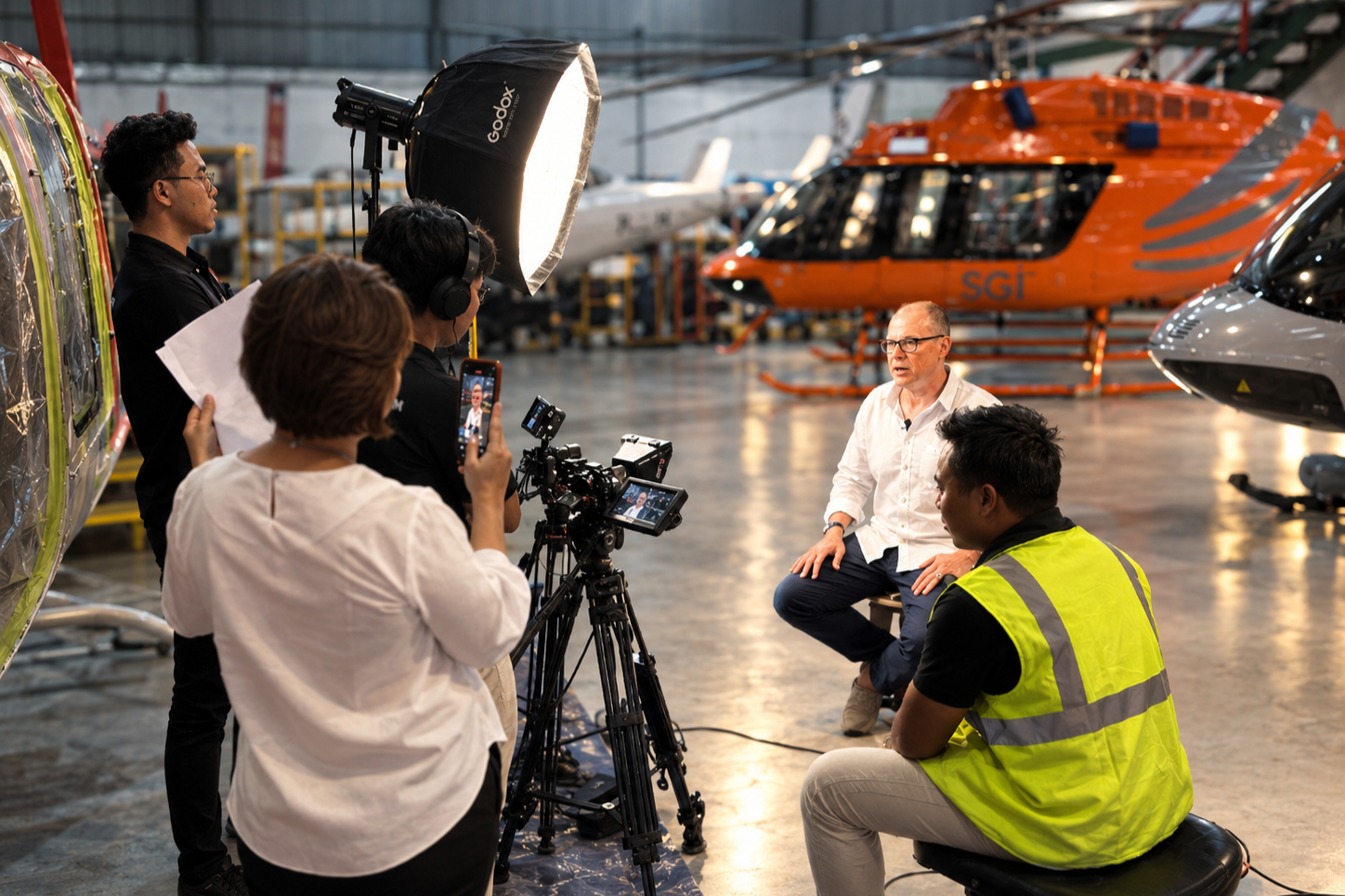
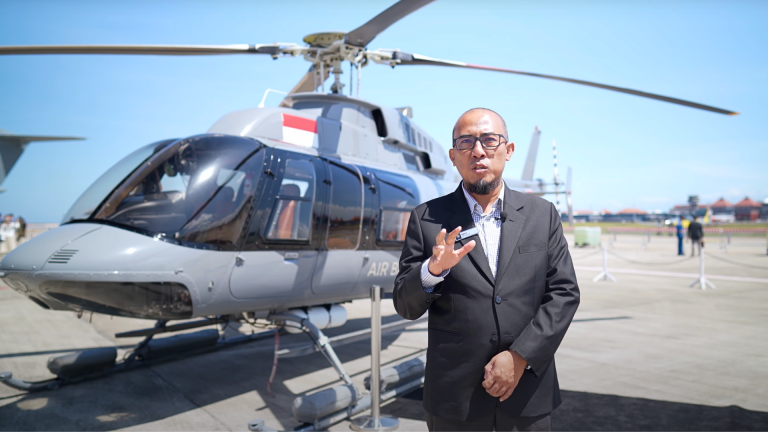
Photo by Aditya Sasta at Benoa Heliport (2024)
How should an executive interview video Jakarta be planned?
Executives are often over-briefed and under-interviewed. Communications teams provide dense talking points, the schedule allows twenty minutes, and every stakeholder expects a separate message. The speaker tries to remember wording instead of thinking about the question. The result is accurate but lifeless.
The remedy is not zero preparation. It is better preparation: define what must be true, what cannot be claimed, which examples are available and where the executive has genuine authority. Our interview approach separates factual guardrails from spoken language.
How should leaders be prepared without over-scripting them?
Share themes, not a transcript. Ask the executive to bring one decision, one difficult moment, one specific example and one forward-looking belief. Conduct a short pre-interview without cameras. Listen for the phrases they use naturally, then build prompts around that language.
For regulated or sensitive subjects, prepare an approved fact sheet and a list of boundaries. That protects the company without forcing every sentence through legal syntax. If an exact statement is mandatory, consider voice-over or on-screen text rather than pretending a memorised paragraph is spontaneous.
How should interview questions be structured?
Move from safe context into experience, tension, decision and reflection. “What does the company do?” invites a brochure answer. “What changed in the market that made this decision necessary?” creates a story. Follow with “What did you see?” and “What was at stake?” before asking for the outcome.
Questions should be short and singular. Avoid embedding the desired answer. The interviewer can ask the same idea from a new angle when the first answer is abstract. Specificity is not aggression; it is how expertise becomes visible.
How do we choose the location and visual setting?
The location should support the executive’s role and the film’s meaning. A boardroom signals governance but can feel distant. An operational setting adds proof but may create noise and safety constraints. A quiet edge of the workplace often balances authority with context.
In Jakarta, assess air-conditioning noise, glass reflections, prayer-room and meeting traffic, building access, electrical supply and travel time. The location recce should test sound and eyelines, not merely photograph the room.
What makes an interviewer effective?
An effective interviewer listens for the unfinished thought. They know the brief well enough to stop reading questions and recognise when a useful answer is one follow-up away. They also manage status: senior leaders should feel respected, but the interview still serves the audience rather than hierarchy.
Silence is useful. So is asking for an example after a polished claim. The interviewer should avoid praising every answer, which trains the speaker to seek approval. Calm attention produces more honest rhythm.
How should difficult or sensitive answers be handled?
Agree escalation rules before filming. If an answer introduces confidential data, legal exposure or a factual uncertainty, mark it immediately and verify later. Do not ask the speaker to solve the issue while lights, crew and executives are waiting.
Consent also matters. Indonesia’s Personal Data Protection Law establishes duties around personal-data processing. Releases, storage, access and intended use should be clear, especially when employees or community members discuss personal experience.
How are interviews edited without changing meaning?
Editing removes repetition and improves structure, but it must not reverse causality, combine incompatible statements or hide material context. Keep transcripts, timecodes and an approval trail. When a sentence is built from separate moments, test whether the speaker would recognise the intended meaning.
TDR FILMS approaches the edit as editorial responsibility, not cosmetic assembly. Our editing process moves from argument to rhythm, then polish.
FREQUENTLY ASKED QUESTIONS
SHOULD EXECUTIVES RECEIVE QUESTIONS IN ADVANCE?
Share themes and factual areas. Full questions can help regulated spokespeople, but verbatim answers usually weaken delivery.
HOW LONG SHOULD THE INTERVIEW TAKE?
Allow 45–90 minutes when possible, plus setup. A shorter slot can work when objectives and examples are already clear.
CAN TELEPROMPTERS HELP?
Yes for mandatory statements. For reflective answers, an interviewer usually produces more natural authority.