

ENGINEERING EQUIPMENT VIDEO PRODUCTION JAKARTA: MAKING A LAB TESTING DEVICE WATCHABLE
Written by Yudi Suarbawa / 5 Minutes Read
TDR FILMS delivers engineering equipment video production Jakarta research teams can use to show their work, and Universitas Indonesia called us back for a second project: documenting an inclusion and fluidity testing device built to support the same casting quality research we had already covered. The device measures how molten metal flows. It also tracks how many impurities end up trapped inside a casting. On paper, that is a lab instrument most people never think about. On camera, it needed to explain itself.
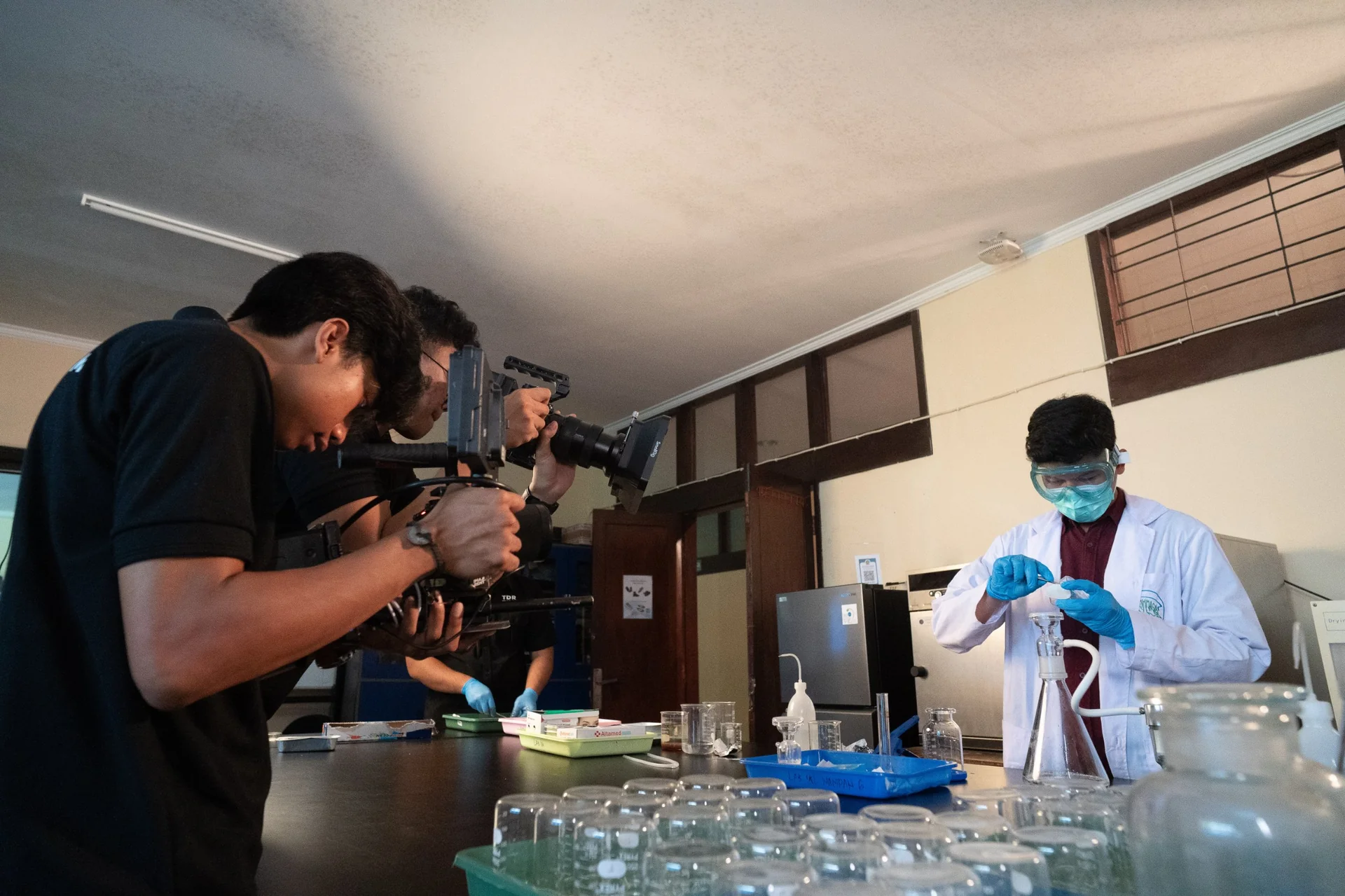
WHY EQUIPMENT VIDEOS ARE THEIR OWN DISCIPLINE
A piece of lab equipment does not perform for the camera. It has no dialogue. It rarely does anything dramatic when the camera rolls. The job is making a static process feel worth watching. Metal flowing through a test rig has to hold attention for more than a few seconds. It has to do that without exaggerating what the device does.
HOW TDR FILMS DOCUMENTED THE TESTING DEVICE
We treated the shoot like a product demonstration. That meant close, detailed shots of the mechanism itself. We paired those with the researcher walking through what each stage of the test measures. Macro shots of the metal flow gave the footage something visually compelling to hold onto. The researcher’s explanation kept the science grounded.
This was our second project with the same UI research group. We already understood how they talk about their own work. That made the shoot faster. It also made the final explanation sharper than a first-time crew could have managed.
HOW TDR FILMS DOCUMENTS EQUIPMENT NO ONE HAS FILMED BEFORE
We always start with a technical briefing, not a shot list. The researcher walks us through what the device measures and why each stage matters. That briefing shapes every camera decision that follows. Filming a process you don’t understand produces footage that looks technical but explains nothing.
Lens choice does real work here. Standard coverage cannot show how metal actually flows through a test rig. We bring macro lenses to capture detail a wide shot would flatten into nothing. Lighting has to stay steady through the whole run, because a testing sequence rarely allows a second take.
Sequencing the edit matters just as much as the footage itself. We cut the device operating first, then the researcher explaining what just happened, then back to the result. That order lets a viewer see the process before hearing the explanation. It sticks better than narration layered over unrelated footage.
WHY MOST LAB EQUIPMENT NEVER MAKES IT ON CAMERA
Research funding rarely stretches to video documentation. At Universitas Indonesia’s Faculty of Engineering alone, 103 researchers secured grant funding in 2025 across three schemes. Almost none of that funding covered filming the equipment itself. That gap is exactly where a documentation project like this one fits. A well-shot equipment video outlives a single grant cycle, and it keeps working for every proposal that follows.
WHY WE SHOT IT DIFFERENTLY FROM THE FIRST UI PROJECT
The ceramic foam filter documentary told a finished-innovation story, with a clear before-and-after. This project had no such arc. A testing device does not produce a dramatic result on camera, only a measurement. We leaned harder on macro detail and the researcher’s own explanation instead of narrative structure. Two projects with the same client rarely call for the same approach. Treating them identically would have undersold both.
WHERE EQUIPMENT FOOTAGE GETS REUSED LONG AFTER THE SHOOT
A well-documented testing device earns its cost back many times over. New lab members use the footage to learn the equipment before touching it themselves. Grant proposals cite the video instead of describing the device in another paragraph of text. Industry partners considering a collaboration get a clear answer to a question words alone cannot settle. Does this lab actually have the capability it claims? That reuse is exactly why documentation like this outlives the funding cycle that paid for it.
WHY BEING ASKED BACK MATTERS HERE
A research group does not bring the same team back for a harder project without good reason. Documenting a testing device is harder than documenting a finished innovation. There is no dramatic before-and-after here. Getting invited back for exactly that kind of project says more than the first booking did.
TDR FILMS applies that same care across Jakarta. See our complete guide to corporate video production in Jakarta for more.
WHY THIS MATTERS FOR RESEARCH AND ENGINEERING TEAMS
Grant reports and industry partnership pitches both benefit from real equipment footage. So do internal demonstrations. A static photo with a caption does not explain what a device actually does. Most research teams never get that kind of documentation. Most production houses cannot make lab equipment interesting on screen.
TDR FILMS built that capability with Universitas Indonesia across two projects. We bring the same approach to every piece of technical equipment we document.
Have lab equipment, prototypes, or testing apparatus that needs to be documented properly?
Tell us what you’ve built. TDR FILMS will make it watchable without exaggerating what it does.