

Company Profile Video Jakarta: Cost, Structure, Timeline and Deliverables
Written by TDR FILMS / 8 Minutes Read
TDR FILMS is the company profile video Jakarta partner for organisations that need a clear, credible film built around people, proof, and purpose. A strong company profile helps a defined audience understand the organisation and decide what to do next.
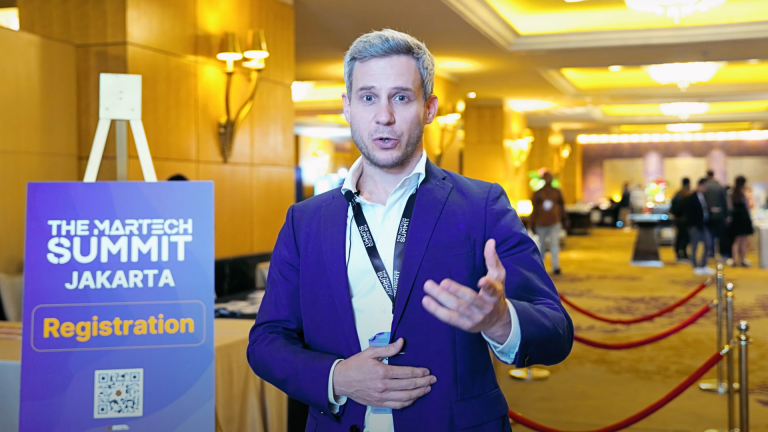
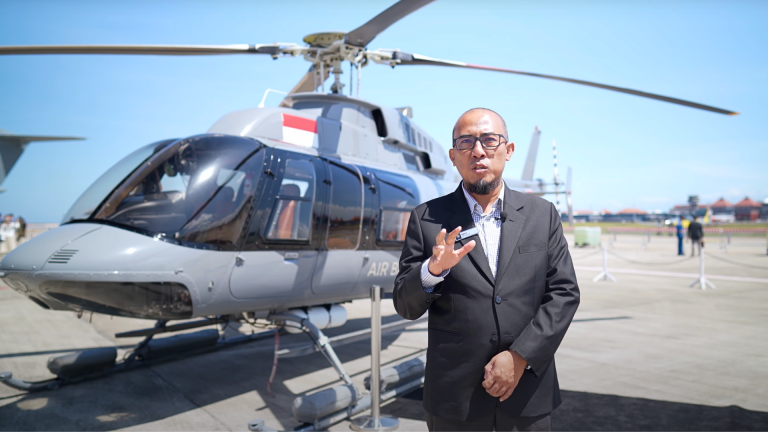
Taken by Pande Satya (2025)
- Choose one primary audience and one intended decision.
- Build the story around people and proof, not a list of claims.
- Plan the master film and cutdowns as one content system.
In 2025, Wyzowl found that 99% of video marketers said video improved understanding of a product or service, while 91% of consumers said production quality affected trust. A company profile therefore carries both information and reputational risk. The structure matters as much as the image quality.
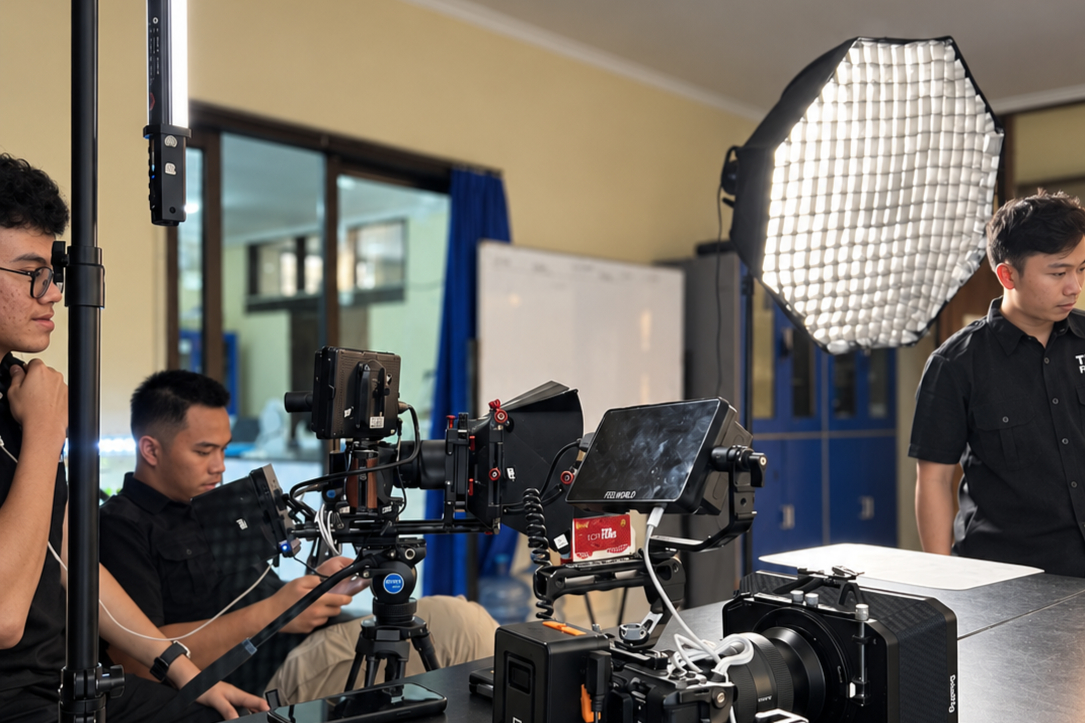
Photo by Eka Aditya at Universitas Udayana (2025)
What is a company profile video Jakarta businesses need?
A company profile video is a concise corporate film that establishes identity, capability and credibility. It usually combines interviews, observed work, locations, products or services, customers and evidence. The strongest versions answer four questions: Who are you? What problem do you solve? How do you work? Why should the viewer trust you?
This differs from a generic brand montage. A profile film must remain useful after the campaign moment has passed. It should sit on the website, support a pitch, introduce the business at an event and provide source material for shorter edits. See our guide to what a corporate video includes for the wider format family.
How much does a company profile video cost in Jakarta?
Professional company profile production in Jakarta commonly sits between Rp40 million and Rp200 million+, depending on research, shoot days, locations, executive availability, animation, talent and the number of final versions. A single-location profile can stay lean. A film covering headquarters, factory, field operations and customer stories needs a different production system.
Price should follow evidence. If the film claims national reach, viewers should see more than a Jakarta boardroom. If it claims technical excellence, the production needs access to the people and processes that prove it. The TDR budget framework helps teams translate those needs into an accountable scope.
What should the story contain?
The story should contain a present-day problem, the company’s response, visible proof and a credible outcome. History is useful when it explains a present capability; it should not consume the opening minute. Mission and values are stronger when demonstrated through decisions, behaviour and customer experience.
TDR FILMS uses documentary logic inside corporate work. We identify a human point of view, then let operations, interviews and evidence support it. That approach protects the film from becoming a brochure. Our corporate brand-film approach explains how brand meaning emerges from what the company enables.
Who should appear on camera?
Choose interviewees for narrative function, not hierarchy alone. A founder or director can explain intent. An employee can explain practice. A customer, partner or community member can validate the result. The film becomes believable when those perspectives complement rather than repeat each other.
Six weak interviews do not outperform three specific ones. Before filming, ask each candidate to describe a decision, obstacle, turning point or observed change. If every answer sounds like website copy, the casting needs revision. The TDR interview process helps real people speak naturally without losing the organisation’s factual boundaries.
How long should the film be?
A master company profile commonly runs two to four minutes. The right duration is the shortest version that completes the argument, not an arbitrary social-media rule. In 2025, Wyzowl reported that 73% of marketers considered 30 seconds to two minutes most effective, but a complex B2B or institutional audience may willingly watch longer when the information remains relevant.
Plan shorter derivatives from the beginning: a 60-second overview, interview-led chapter cuts, vertical moments and silent-caption versions. This protects the master narrative while giving distribution teams assets built for specific platforms.
What does the production timeline look like?
A realistic company profile takes four to eight weeks: one to three weeks for development, one to several shoot days, then two to four weeks for editing and approvals. Executive calendars, permits and multi-department feedback can extend the schedule more than the technical work.
The timeline should name decision owners. One client lead should consolidate comments before they reach the editor. Legal and brand reviewers should enter at agreed stages. The TDR FILMS production workflow separates treatment, rough cut, fine cut and master delivery so each review has a purpose.
Which deliverables should be included?
A useful package normally includes a 16:9 master, subtitle file, captioned version, one or more shorter edits, vertical versions where needed, approved thumbnail frames and clean masters without subtitles. Archive and raw-footage terms should be agreed before production, not requested casually at the end.
Every output should serve a channel and audience. More versions are not automatically more value. The better question is where the buying, hiring or stakeholder decision happens, then design the deliverables around that journey.
FREQUENTLY ASKED QUESTIONS
IS A COMPANY PROFILE THE SAME AS A CORPORATE VIDEO?
A company profile is one type of corporate video. Corporate video also includes recruitment, training, investor, ESG, testimonial and internal-communication films.
CAN EMPLOYEES REPLACE PROFESSIONAL ACTORS?
Yes, and they often add credibility. They still need careful casting, consent, scheduling and interview preparation.
SHOULD THE CEO OPEN THE FILM?
Only when the CEO is the strongest way into the audience’s problem. Seniority alone is not a narrative reason.