

Documentary Production Bali: What a Governor's Mandate Taught Us About Serving Every Client Better
Written by Tristan D. Rama / 5 Minutes Read
Picture by Fandy Pranata at Jaya Sabha (2025)
TDR FILMS delivers documentary production in Bali for projects where government direction, cultural heritage, local communities, remote logistics, and public communication must work together. Our work on Besakih: A Balinese Heritage was developed within the cultural-preservation context of Governor Wayan Koster’s Nangun Sat Kerthi Loka Bali vision, and it reinforced a principle that now guides every project we make: a serious film begins by understanding the world it enters.
The project concerned Pura Agung Besakih, Bali’s most sacred Hindu temple complex. It involved public education, cultural heritage, religious practice, community life, historical research, and the responsibility of representing a place that cannot be reduced to visual spectacle. That responsibility demanded more than a good crew, strong lenses, and beautiful aerial footage. It required research, stakeholder alignment, patience, and a production process that respected both the institutional objective and the people who continue to carry the story.
While Besakih: A Balinese Heritage has not yet been publicly released, the production has already changed how TDR FILMS approaches documentary, corporate, government, impact, industrial, and remote-area projects across Bali, Jakarta, and Indonesia.
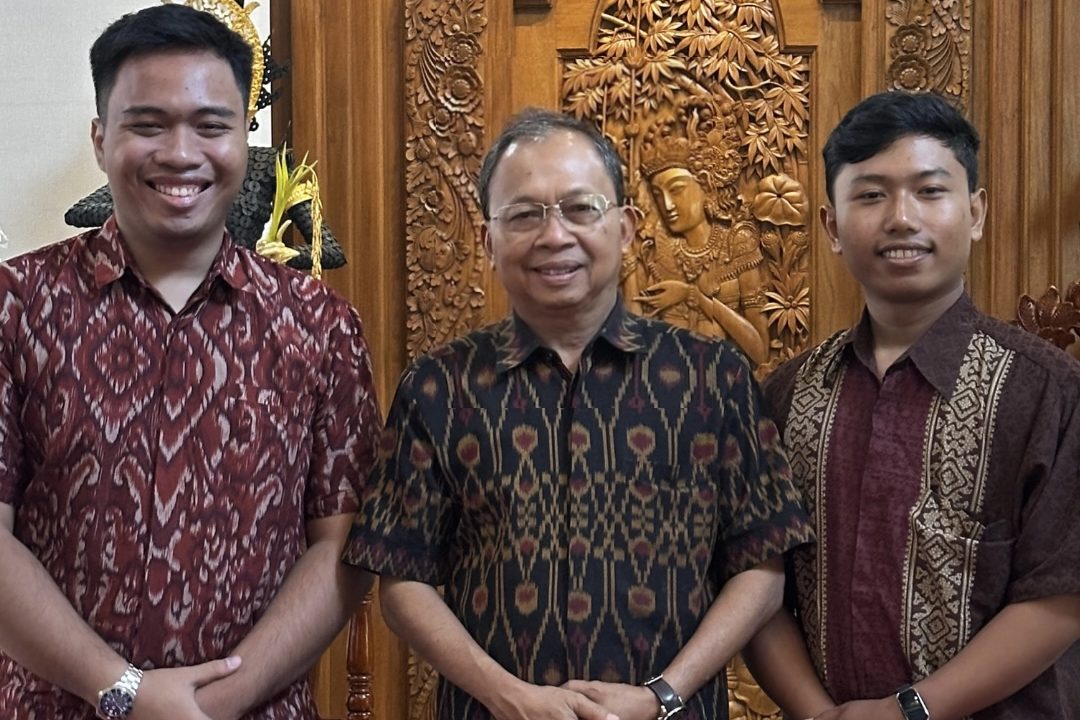
Photo with Tristan D. Rama (left), Wayan Koster, Governor of Bali (center), and Yudi Suarbawa (right)
Documentary Production in Bali Requires Cultural and Institutional Literacy
When organisations search for documentary production in Bali, they often imagine temples, rice fields, mountains, ceremonies, and drones. Those images are part of Bali’s visual language, but they are not automatically a story. A strong documentary asks a harder question: what does this place, person, programme, or institution actually mean to the people living inside it?
That question changes the production process from the first conversation. Rather than beginning with, “What should we film?”, we begin with, “What must the audience understand, and whose experience makes that understanding real?” The answer may come from a community elder, a worker, a parent, a cultural practitioner, an executive, a local guide, a government representative, or someone whose work rarely appears in front of the camera.
For Besakih, the temple could not be framed as a tourism attraction. It had to be understood as a living cultural and spiritual ecosystem. The temples, ceremonies, offerings, surrounding villages, and local relationships all carried meaning. Our responsibility was to turn that complexity into a clear narrative without flattening it into a corporate message or a scenic montage.
That is what separates documentary production from content creation. Good content attracts attention. A good documentary earns trust.
The Wayan Koster and Besakih Context Raised the Standard
The context around Besakih mattered from the beginning. Bali Governor Regulation No. 4 of 2023 establishes an integrated management framework for the sacred Pura Agung Besakih area. The regulation recognises its sanctity, cultural value, and the need for accountable management. That gave the project a responsibility beyond visual production.
Governor Wayan Koster’s Nangun Sat Kerthi Loka Bali vision provides another layer of meaning. The vision connects development with the protection of Bali’s natural environment, people, and cultural identity. It is not simply a slogan to place in a title sequence. It is a framework that affects how cultural heritage is understood, protected, and communicated to future generations.
For TDR FILMS, this meant that research had to come before creative decisions. We needed to understand the role of Besakih, the purpose of the documentary, the communities connected to the site, and the limits of what should be simplified for a general audience. We needed a production design that could support educational clarity without losing reverence for the subject.
A government mandate can establish direction. A documentary becomes believable when the people closest to the subject give that direction human meaning.
Local Communities Give the Story Its Legitimacy
The Pragunung villages surrounding Besakih gave the documentary a human scale that architecture alone could never provide. Their connection to the temple is not incidental. It is part of the wider cultural system that has supported, protected, and carried Besakih through generations.
This is where many institutional and corporate films go wrong. They frame local people as visual atmosphere around a pre-written message. The audience sees traditional clothing, ceremonies, work routines, or community activity, but never understands the perspective of the people involved. The result may look polished, but it lacks depth.
TDR FILMS works differently. We do not begin by deciding what a community should represent for a client. We first identify the relationship between the subject, the location, the stakeholders, and the people who give the story its credibility. That approach is important in cultural work, but it also applies to mining, infrastructure, ESG, education, healthcare, agriculture, and employer-supported programmes.
For projects involving customary or indigenous communities, the responsibility becomes even more specific. Identity should not be assigned carelessly. Cultural knowledge should not be treated as open-access content. Language, permissions, representation, interview framing, and filming access should follow community guidance and the client’s safeguarding obligations.
This aligns with UNESCO’s guidance on community involvement in living-heritage documentation. The lesson is direct: early and continuous participation creates more accurate, ethical, and durable storytelling.
What International Heritage Practice Reinforces
This principle is not unique to Bali. International heritage practice increasingly recognises that communities should help define why heritage matters, rather than being treated as passive subjects of institutional interpretation.
The Cultural Heritage Agency of the Netherlands describes this as “co-valuing heritage”. The principle is useful because it shifts the question away from “How do we explain this place?” and toward “Who has the right knowledge, memory, and relationship to explain why this place matters?”
That does not mean every production needs an academic process. It means the team needs the maturity to know when a story requires more listening, more research, more consultation, and more time before the camera rolls.
For Besakih, that meant respecting a living heritage site. For a Jakarta corporation, it may mean understanding the difference between an ESG claim and the lived reality of people affected by the programme. For an industrial client in a remote area, it may mean knowing that the headquarters owns the brief, while workers, local stakeholders, and field conditions determine whether the final film feels credible.
The location changes. The documentary discipline stays the same.
From Bali to Jakarta: Documentary Thinking for Serious Organisations
Jakarta is where many of Indonesia’s most important communications decisions are made. It is home to corporate headquarters, government institutions, NGOs, foundations, investor audiences, and national campaigns. Yet the stories those organisations need to tell often happen elsewhere: in remote villages, mines, factories, airports, plantations, ports, schools, construction sites, or community programmes.
That gap creates a production challenge. The brief may be approved in Jakarta, but the truth of the story often lives in the field.
TDR FILMS is built to bridge that gap. We bring a Bali-rooted sensitivity to place and culture, alongside the structured production discipline that Jakarta clients expect. Our process covers research, story development, stakeholder interviews, interview preparation, location planning, technical recce, consent processes, field logistics, crew management, production, post-production, subtitles, short-form cutdowns, and delivery for multiple platforms.
The same method informs our corporate brand film approach, interview approach on camera, and corporate video production process in Jakarta.
A corporate or government film can still have a clear message. It may need to build trust, support recruitment, communicate impact, explain a complex operation, document a programme, or strengthen a brand’s position. But the message should emerge from evidence. It should not suffocate the story before the audience has a reason to care.
How TDR FILMS Handles High-Context and Remote Productions
TDR FILMS works best when a project needs more than standard coverage. Before production, we define the story hypothesis, the audience, the decision-makers, the people who should be interviewed, the places that carry evidence, and the risks that could weaken the story or complicate the shoot.
That preparation becomes particularly important in remote and multi-stakeholder productions. Field shoots can involve travel windows, weather, access restrictions, security protocols, limited connectivity, community coordination, operational schedules, equipment transport, language considerations, and sensitive approval structures. A production team cannot solve those issues on shoot day. The work has to begin earlier.
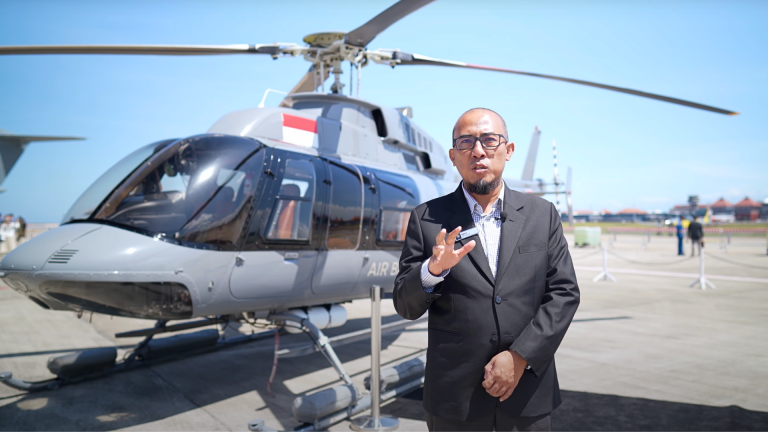
Our experience ranges from government-scale event work, including the G20 Bali Summit and Pertamina coverage, to aviation, industrial, and field-based projects involving Bell Textron, Sayap Garuda Indah, PT Freeport Indonesia, and AMMAN Mineral Nusa Tenggara. The industries differ, but the standard remains consistent: understand the operational world, respect the people inside it, and create a film that can stand up to scrutiny from both the client and the audience.
That is why production capability is not only about equipment. It is about judgment.
What Besakih Taught Us About Serving Every Client Better
The Besakih project reinforced a simple rule for TDR FILMS: the subject comes before the message.
That does not remove strategy. It improves strategy. A government programme becomes easier to understand when the audience sees the real lives connected to it. A corporate initiative becomes more believable when viewers can observe the action, not just hear the claim. A brand becomes more memorable when it understands the people it wants to reach.
The lesson carries into every sector. We research before scripting. We ask questions before writing a message. We understand the people and place before deciding what a beautiful shot should mean. We build films that work for institutional audiences, public audiences, local stakeholders, employees, customers, investors, and communities without pretending that one generic message will reach everyone.
For TDR FILMS, documentary production is not simply about recording events. It is about preserving knowledge, communicating ideas, managing responsibility, and telling stories that matter.
That is the commitment we bring to clients across Bali, Jakarta, and Indonesia. This project is not filmed by gg of course LOL.