


THE FIRST CALL: WHAT WE ACTUALLY LEARN IN A DISCOVERY CONVERSATION
Written by Yudi Suarbawa / 5 Minute Read
The discovery call at TDR FILMS is not a sales pitch. Most clients who have worked with other production houses before arrive expecting one. They expect to hear about our reel, our equipment, our day rates, and our availability. Instead, we ask questions. A lot of them. And we listen to the answers more carefully than most people expect.
That is because the discovery call at TDR FILMS is where we figure out whether we can actually help. Not whether we want the project. Not whether the budget is right. Whether we are genuinely the right team to do what this brand needs done, and whether the conditions exist to do it well. According to ManyRequests’ 2026 agency onboarding research, the most effective creative partnerships begin with one focused strategy call that covers primary goals, internal workflow, and the review and approval process. Therefore, we treat the first conversation as the most important creative investment we can make.
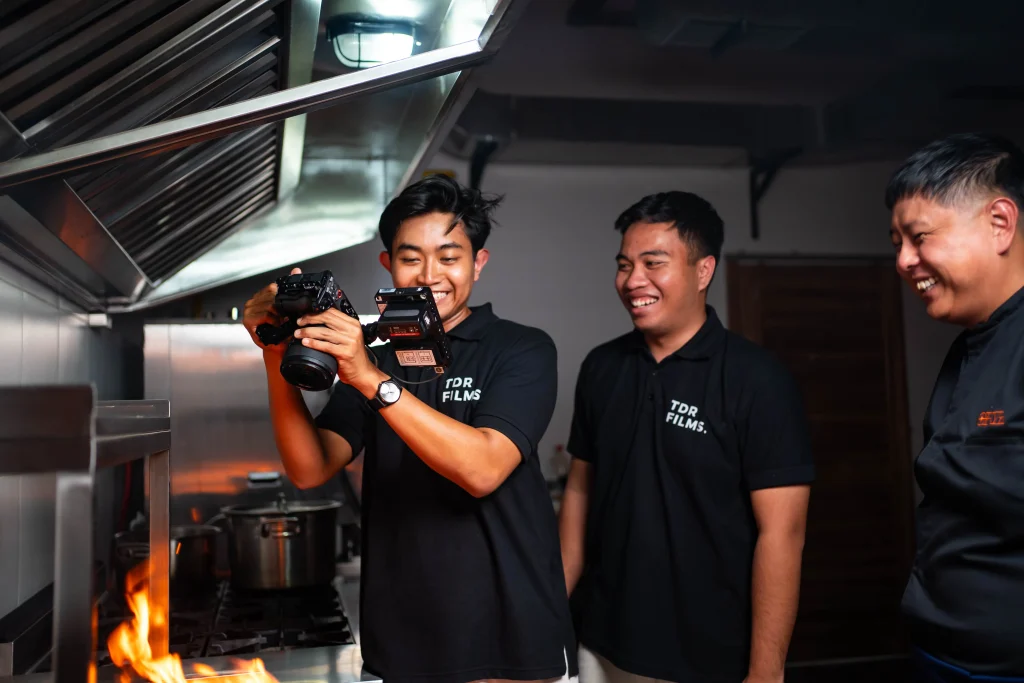
Picture by Rey Irawan – Taken at ORYn Ubud (2026)
WHAT THE DISCOVERY CALL TDR FILMS ACTUALLY COVERS
There are questions we ask in every discovery call, regardless of the brief. They are not on a checklist. However, they always come up because the answers shape every decision that follows.
The first question is about the objective. Not “what do you want the video to be?” but “what do you want to happen after someone watches it?” Those are different questions. The first produces a description of a film. The second produces a business outcome. We are only interested in the second, because the first exists to serve it.
The second question is about the audience. Specifically, who is the most important person watching this, and what does that person need to feel before they take action? A film for a 45-year-old hotel GM in Singapore is a different film from one targeting a 27-year-old wellness consumer in Jakarta, even if the brand is the same. Understanding the audience before the shoot determines more about the final film than any gear decision or location choice.
The third question is about the gap. What is the difference between how the brand sees itself and how its audience currently sees it? That gap is often where the most interesting creative territory lives. In addition, it is usually where the client’s previous content has failed to make an impact.
WHAT WE ARE LISTENING FOR BENEATH THE ANSWERS
The direct answers to our questions matter. However, what we are listening for beneath them matters more.
We are listening for alignment. When a brand says they want to “feel premium” but their budget suggests social content, there is a misalignment worth exploring before a proposal is written. When a marketing manager says the brief is “flexible” but mentions four internal stakeholders who all need to approve the final cut, that is a production complexity that will affect timeline and cost. Catching these things in the discovery call saves everyone from discovering them in post-production.
We are also listening for clarity. The brands that arrive with vague briefs are not bad clients. They often just have not had the right conversation yet. Part of what the discovery call at TDR FILMS does is help a brand articulate what they actually want, because many clients know what they need but have not found the language for it yet. A good discovery conversation draws that out. As a result, the brief that comes out of the call is almost always sharper than the one that came into it.
Furthermore, we are listening for fit. Not every project is right for TDR FILMS, and not every brand is right for the way we work. We are a small, senior team. We work closely with our clients and involve them in the creative process from the start. Brands that want a hands-off vendor who executes instructions will be better served elsewhere. Brands that want a creative partner who will push back, ask hard questions, and care about the outcome as much as they do tend to find our approach worth it.
THE QUESTIONS THAT TELL US THE MOST
Three questions consistently reveal the most about whether a project will succeed.
The first is: who is the single point of contact on your side? The answer tells us immediately how decisions get made. A clear single point of contact means faster feedback, cleaner creative direction, and a smoother post-production process. Multiple stakeholders with equal authority means a longer approval cycle and a higher likelihood of conflicting notes in the edit. We do not refuse projects with complex internal structures. However, we talk about it early, because it affects the timeline and the process.
The second is: have you made a video like this before? If the answer is yes, we ask what worked and what did not. The honest answer to that question reveals more about what the brand actually needs than any brief document. If the answer is no, we ask what made them decide to invest now. The motivation behind the first video commission often carries the most clarity about the real objective.
The third is: what does success look like six months from now? Not three weeks after delivery. Six months. The answer forces the conversation away from production outputs and toward business outcomes. A brand that can answer that question specifically tends to be a brand that knows what they are building toward. In contrast, a brand that cannot answer it often needs more strategic clarity before production begins. That is not a problem. It is useful information, and it is much better to surface it in the first call than in the edit suite.
WHAT HAPPENS AFTER THE DISCOVERY CALL TDR FILMS COMPLETES
If there is alignment on both sides, we move into proposal development. Our proposals are not templates with the budget changed at the top. They are built from the notes of the discovery conversation. The creative approach, the recommended format, the production structure, and the timeline all reflect what we learned in that first call.
If there is not alignment, we say so. Not every brief is right for us. Not every timeline is realistic. Not every budget matches the scope of what the brand is describing. We would rather have that conversation before the contract is signed than discover it halfway through pre-production.
The discovery call at TDR FILMS is, in the end, a test of whether a real partnership is possible. Not whether a transaction is possible. That distinction is what makes the rest of the process work.
Thinking about working with TDR FILMS and want to start with a conversation?
That is exactly what the first call is for. No pitch, no pressure. Just the right questions.