


WHAT TO EXPECT ON YOUR FIRST VIDEO PRODUCTION SHOOT
Written by Yudi Suarbawa / 5 Minute Read
Your first video production shoot will almost certainly surprise you, and not in a bad way. Most clients arrive on set expecting something chaotic, loud, and hard to follow. What they find instead is a room full of focused people doing very specific jobs, moving through a very specific plan. There is a lot happening, but it is not random. Once you understand what each part of the day is for, the whole thing starts to make sense.
According to Chromatic DC’s 2026 client guide, the production day is where most misconceptions happen. Professional crews typically arrive before the client and spend the first hour setting up before any filming begins. Many first-time clients are surprised by this. However, that setup time is one of the most important parts of the day. The lighting, the audio, the framing, and the background details are all set during this window, and they directly affect how professional the final result looks. Therefore, knowing what to expect before you arrive makes the whole experience much smoother.
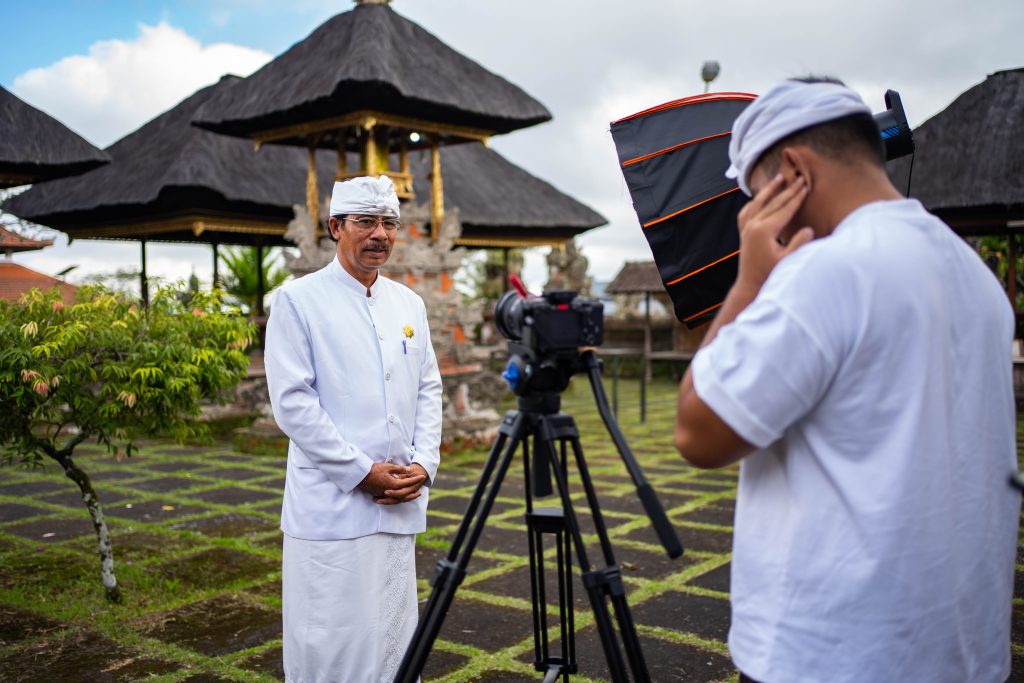
Picture by Yudi Suarbawa – Taken at Pura Agung Besakih (2026)
WHAT HAPPENS BEFORE THE CAMERA ROLLS ON YOUR FIRST VIDEO PRODUCTION SHOOT
The crew arrives first. On a TDR FILMS shoot, call time for the crew is typically one to two hours before talent or clients are expected on set. During this window, the team unloads equipment, sets up the lighting rig, dials in the camera frame, positions the audio, and checks every technical element.
This process takes time. A simple interview setup alone can take 45 minutes to an hour. More complex scenes with multiple light sources, moving cameras, and specific background setups take longer. In addition, the director and DP walk the location together during this time, making final decisions about angles and sequences.
When you arrive, most of the technical work is already done. Your job at this point is to be present, stay relaxed, and trust the team. The crew is not waiting on you to solve problems. They have already solved them.
THE ROLES ON SET AND WHAT EACH PERSON DOES
One of the most disorienting things about a first video production shoot is the number of people involved. Here is a plain breakdown of who does what:
The director is the person you communicate with most. They manage the creative vision, direct the talent, and make decisions about what gets captured and how. If you have a question about whether a shot looks right, the director is the person to ask.
The director of photography, or DP, manages the camera and the light. They are responsible for how the film looks. Meanwhile, the gaffer handles the physical lighting setup under the DP’s direction.
The sound recordist manages all audio on set. This person is often the quietest member of the crew, but their work is one of the most important. Poor audio can ruin otherwise strong footage. In contrast, great audio makes even simple images feel polished.
The production coordinator keeps the schedule moving. They track time, manage logistics, and make sure the day does not fall behind.
HOW TO BEHAVE ON SET AS A CLIENT
This is the part no one tells first-time clients, and it is more useful than any technical explanation.
The most helpful thing you can do on set is consolidate your feedback through one person. If five people from your team are each telling the director different things, the shoot slows down and the creative gets muddied. Decide before shoot day who your single point of contact is, and let that person be the one voice the director hears.
Furthermore, trust the plan. Pre-production exists so that the shoot day has no surprises. If the team has done its job in prep, the decisions about story, tone, and content are already made. Your role on set is not to redesign the film in real time. It is to be present, approve what you see in the monitor, and let the crew execute.
That said, speak up if something feels wrong. A good director welcomes a client who says “that doesn’t feel right” over one who stays silent and complains in the edit. The set is a collaborative space. You are not just observing. However, there is a difference between creative input and creative control, and the best client relationships are ones where both sides understand that distinction.
WHAT THE PACE OF A SHOOT ACTUALLY FEELS LIKE
A video shoot day does not move at the speed of regular work. It moves in bursts. There are periods of intense focus and fast movement, followed by periods of waiting while the crew resets, changes lenses, or moves lighting to a new position.
First-time clients sometimes find the waiting uncomfortable. They feel like they should be doing something. In reality, those pauses are productive time for the crew. Because of this, the best thing a client can do during a reset is stay out of the way, stay available, and stay fed. A hungry, distracted client is one of the most common causes of a shoot running long.
Most video shoot days in Bali run 10 to 12 hours. Energy management matters. TDR FILMS builds breaks into every production schedule because a crew that has eaten and rested moves faster and thinks more clearly than one that has been grinding for six hours straight.
WHAT HAPPENS AFTER THE SHOOT WRAPS
When the crew calls wrap, the shoot day is over but the project is not. The footage goes to the edit suite, and a new phase begins. At this point, your main job is to be responsive.
The biggest variable in post-production timelines is how quickly the client reviews and approves edits. According to Awakened Films’ 2026 production guide, the best results come when the schedule allows proper time for feedback rather than rushed approvals. Therefore, block time in your calendar for the rough cut review before the shoot even happens. Knowing when you need to be available makes the whole post-production phase run faster.
Your first video production shoot will feel new and possibly overwhelming for the first hour. After that, most clients relax into it. The crew knows what they are doing. Your job is to let them do it.
About to do your first video shoot and want to know what to expect?
Talk to TDR FILMS before you arrive on set. We will walk you through the day so nothing catches you off guard.